
Pause Cute Cafe Visits And Viral Bakeries Because These Delightful Traditional Korean Snacks Are A Must-Try On Your Next Visit To South Korea
I’m a foodie, so it’s no surprise that 90% of my friends are foodies as well. But whenever I mention enjoying traditional Korean snacks during the months I’ve spent in South Korea, I’m often met with “isn’t it just rice cakes or the usual cafe cakes and bakes?”.
Far from that in fact. While it’s true that the classic rice cake is a staple in South Korea, so much so that it is found in both savoury and sweet dishes, there are a myriad of other traditional Korean snacks one can enjoy aside from the classic tteokbokki. I know I did. 😉
Since you’re here, I’m sure you are curious to discover the delicious Korean traditional snacks you could enjoy in South Korea. Even more so when you take into account that you can only buy and consume so many snacks with the limited time you have during your explorations through popular cities like Seoul, Busan, and Gyeongju.
And you have indeed come to the right place because these are the snacks I enjoyed and highly recommend trying at least once during your trip there.
15 Must-Try Traditional Korean Snacks In South Korea
1. Hwangnam-ppang (황남빵)
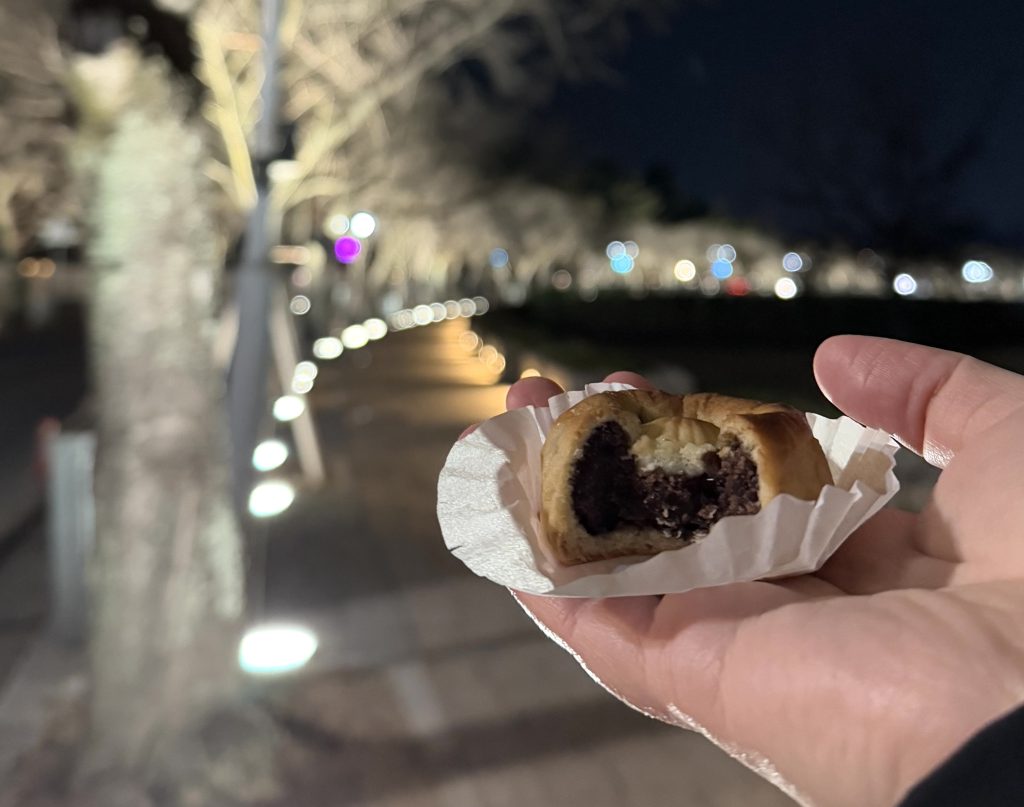
I first discovered Hwangnam-ppang’s existence when I was lurking around Naver Maps while researching places and restaurants to check out in Gyeongju. It’s not everyday that you see multiple location pins showing “Gyeongju Bread” across the map, and the reason for that is because you’ll find countless local bakeries specialising in hwangnam-ppang throughout the city, especially within the district of Hwangnidan-gil.

Hwangnam-ppang is the traditional regional sweet bread of Gyeongju, also known as South Korea’s old capital city. It’s basically a thin wheat-based pastry that encases an incredibly generous portion of smooth, sweet red bean paste, similar to the traditional Cantonese mooncake, only that hwangnam-ppang’s “skin” is far thinner with a different design altogether that was inspired by the motifs of the ancient Silla dynasty.
It’s a simple, mildly sweet and earthy traditional Korean snack that makes a lovely souvenir for your loved ones back home after your Gyeongju adventures. The only downside is that you’ll have to buy a whole box of them because they are not sold individually (the smallest I found was a box of 8). That said, if you do find a bakery that sells them individually, I’d love it if you could share the spot with me!
2. Yakgwa (약과)
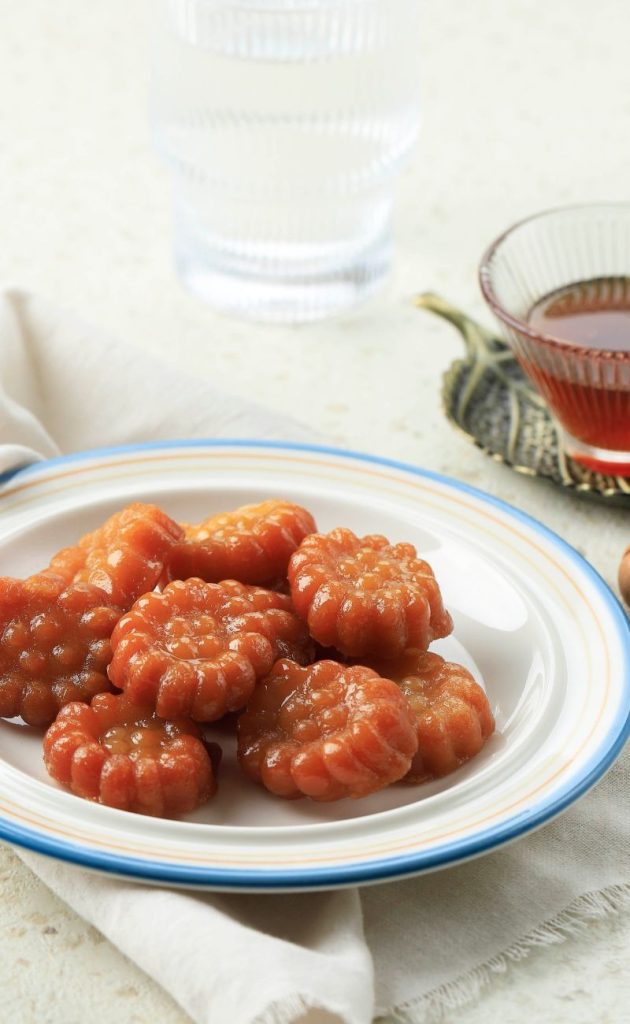
Yakgwa is a personal favourite that I simply could not get enough of. It’s a traditional Korean honey cookie that is typically made by deep-frying a flower-shaped dough made of wheat flour, sesame oil, and honey. Some modern confectionaries even add ginger-infused syrup or cinnamon to give this traditional honey cookie’s flavour a warm depth, and sesame seeds for a hint of extra crunch.
Sweetness aside (because your girl here has a sweet tooth), what I really enjoyed about this traditional Korean snack was its texture. Think crisp and dense on the outside, but soft and chewy once you bite into it. Yakgwa comes in two sizes, a thick, palm-sized cookie, or small, individually packed bite-sized cookies in a pack, with the former being more commonplace in Korean traditional markets and the latter in supermarkets.
A fun fact about yakgwa, is that these traditional cookies were historically served at royal banquets, weddings, and major celebrations. But today, yakgwa is commonly enjoyed wherever and whenever, especially during tea time alongside a cup of bori-cha (roasted barley tea) or nok-cha (Korean green tea).
3. Ssuk-tteok (쑥떡)
When I mentioned liking ssuk-tteok to a local friend I made in Seoul, he instantly told me that I had the tastebuds of an ahjumma. Some may get offended, but I personally took it as a compliment because the local ahjummas typically have the best food recommendations (hah, try again, Jino!).
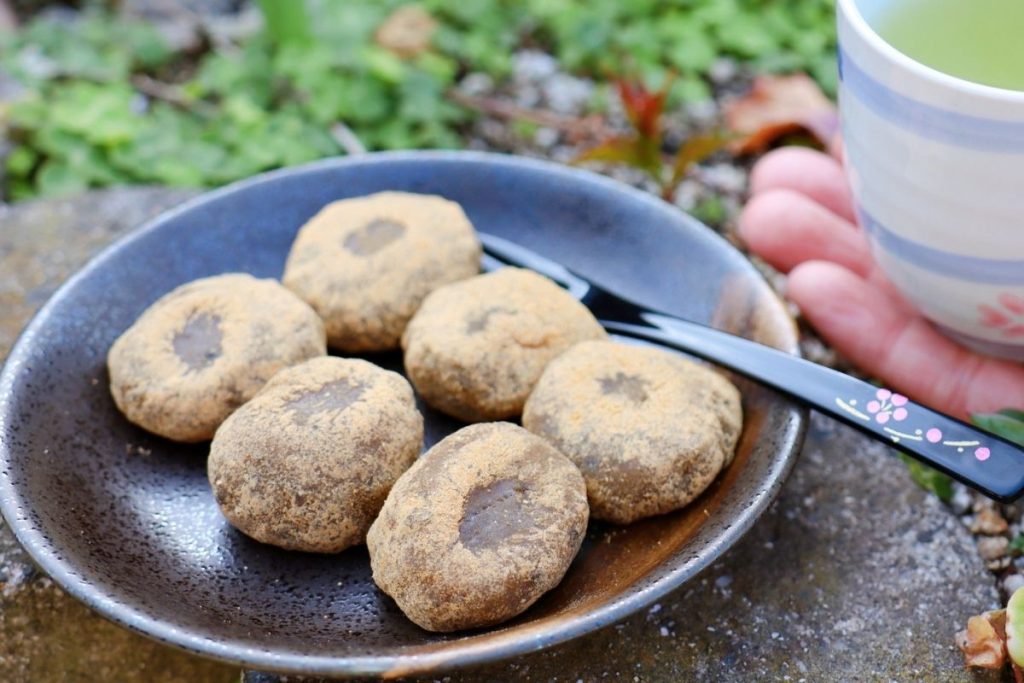
Ssuk-tteok is not your usual rice cake because this particular type of rice cake is made by kneading mugwort (ssuk) into glutinous rice dough, giving it its signature green hue, and it is often coated with fine bean powder. Since mugwort has long been a staple in Korean food and folk medicine for its natural health-supporting properties, ssuk-tteok is really as traditional as it can get when it comes to traditional Korean snacks.
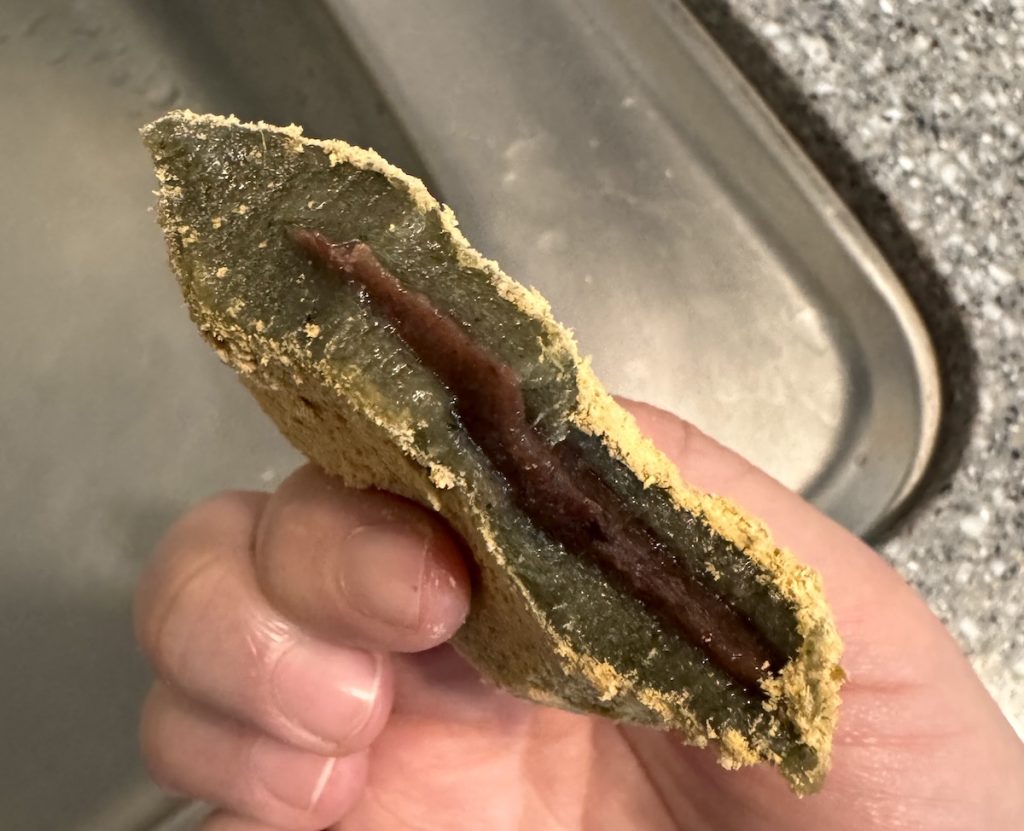
The texture of ssuk-teok is softer than most tteok, chewy, and slightly elastic. You will typically find ssuk-tteok filled with red bean paste in traditional markets and dedicated rice cake shops, making each bite a gentle, earthy, and sweet delight for your senses.
4. Songpyeon (송편)
When I was in Busan’s Bujeon Market, I bought myself a pack of ssuk-tteok from a rice cake vendor in admittedly broken hangul, who proceeded to throw in an extra bag of songpyeon and said “seobisu”. This made the concept of “seobisu” a memorable discovery during my short stint in Busan.
Fun Fact: Seobisu basically means “on the house”, which is when you are given a freebie by a shopkeeper or restaurant.
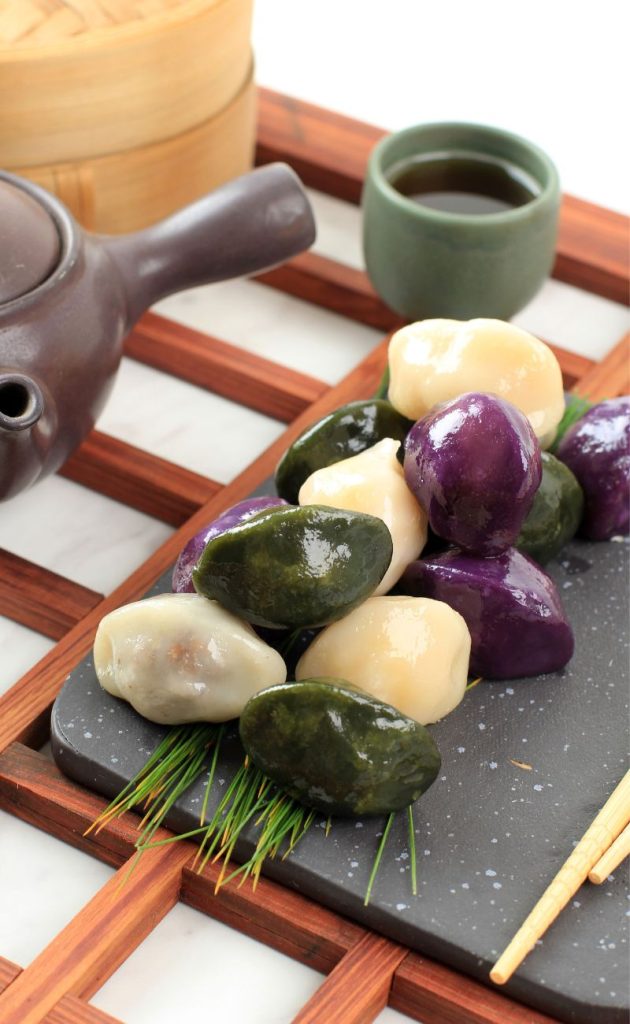
Songpyeon is a half-moon-shaped rice cake that is traditionally made for Chuseok, the annual Korean harvest festival. This particular rice cake has a smooth, glossy exterior, a chewy yet tender overall texture, and it is mildly sweet thanks to its common filling of either sweet red bean paste, chestnut paste, or mung bean paste. The fact its preparation involves steaming it over pine needles also gives songpyeon its lovely aroma.
One beautiful aspect of songpyeon is how its half-moon shape is said to bring good fortune to whomever consumes it. That said, I find that songpyeon’s texture is what makes it enjoyable to eat, especially if you enjoy smooth textures that are also tender and chewy.
5. Gimbap (김밥)
I’ll admit that I was reluctant to buy any gimbap during my first week in Seoul because I’m not a fan of pickles, and they are typically filled with pickled vegetables. But when Jenny, my host mum, treated me to a plate of gimbap from a nearby local favourite haunt along with a short lesson on preparing Korean green tea (she’s a tea sommelier), I was completely sold.
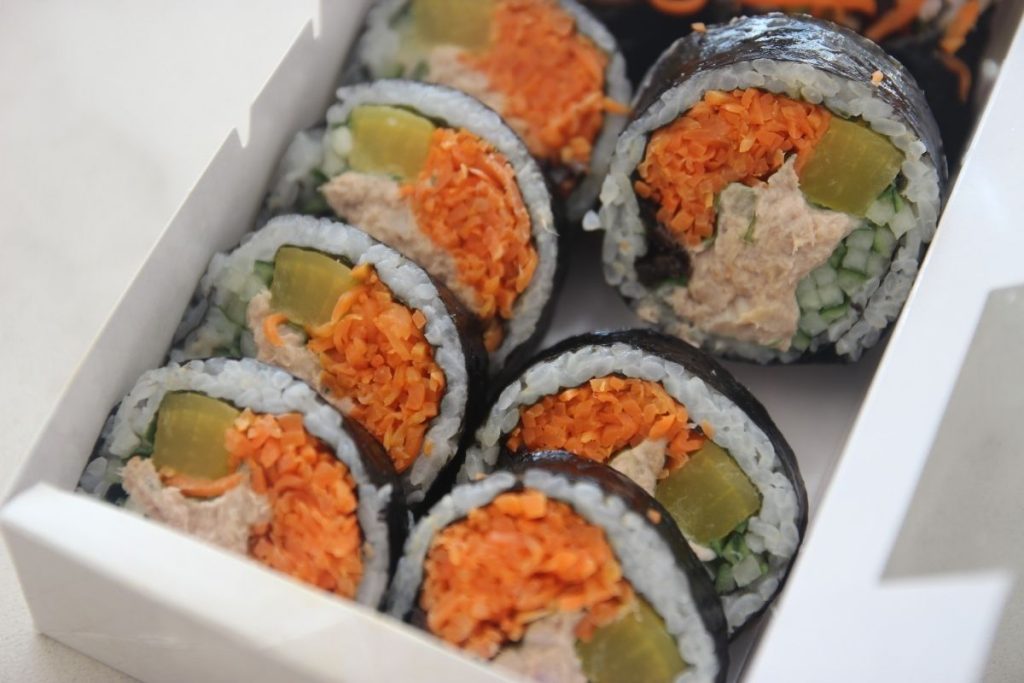
While gimbap can be enjoyed as a full meal, this Korean rice roll has cemented itself as a traditional Korean snack over the years thanks to its varied fillings, widespread accessibility, and convenience to be enjoyed on-the-go.
Gimbap is made by rolling seasoned short-grained sticky white rice and various fillings such as eggs, vegetables, pickled radish, kimchi, fish cakes, or even bulgogi, in dried seaweed. The flavour combinations are endless, which is why I found myself enjoying a gimbap for breakfast almost every other day during my return to Seoul.
6. Ggultteok (꿀떡)
When Jenny told me about ggultteok, my inner sweet toothed glutton simply could not resist asking almost every rice cake vendor I saw if they had ggultteok in stock. Somehow these tiny morsels eluded me until I got to Busan and found it in an unsuspecting rice cake specialty store.
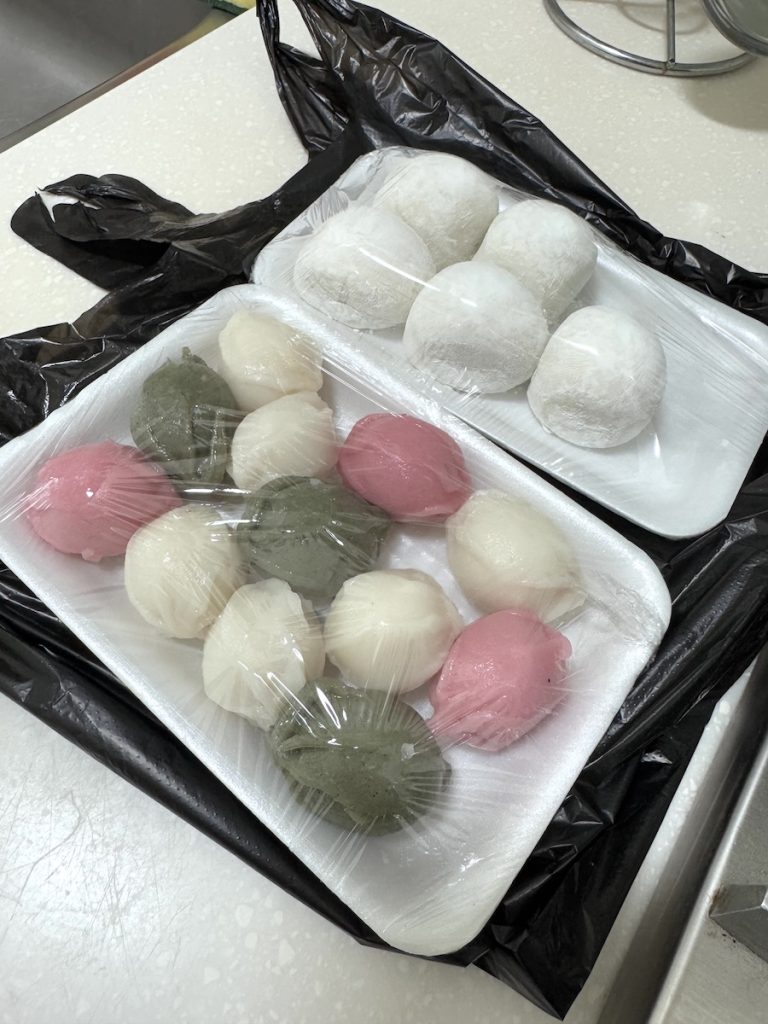
Ggultteok essentially means honey (ggul) and rice cake (tteok), which is self-explanatory. It’s a small, bite-sized glutinous rice cake that has almost the same texture as songpyeon. Ggultteok is typically filled with honey, but because honey tends to be expensive, you’ll often find it filled with sweet syrup instead.
I’ve tried both types of ggultteok and found the honey one to be far superior and less sweet compared to the ones filled with syrup, so that’s something you’ll want to keep in mind when seeking it out.
7. Chapssal-tteok (찹쌀떡)
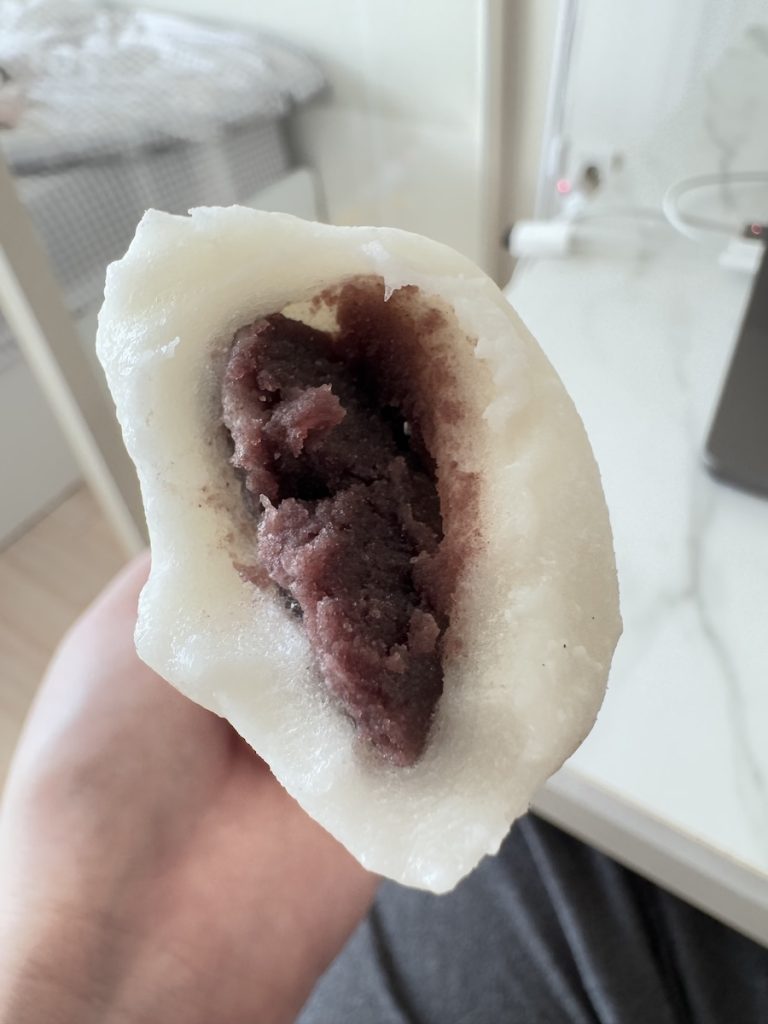
Chapssal-tteok and ssuk-tteok are often confused with one another because “chapssal-tteok” refers to glutinous rice cakes that are filled with sweet red bean paste. The only difference between the two is that chapssal-tteok is made from plain glutinous rice flour and it is often coated in a type of starch powder like corn starch to prevent its exterior from being too unpleasantly sticky to handle.
When I tried chapssal-tteok, I was surprised with how it was chewier and denser than ssuk-tteok. The starch powder coated on the rice cake’s exterior also gave its texture a slight friction once bitten into. So if you’re a fan of chewy textures, this is one rice cake you’ll definitely want to try.
You’ll be able to find chapssal-tteok in any traditional rice cake shop, traditional markets, most local bakeries, and almost every local supermarket across South Korea as this is one of the most common rice cakes.
Fun Fact: Chapssal-tteok is often confused with the Japanese daifuku because of its highly similar nature, but chapssal-tteok is generally denser and starchier because of the starch powder that coats its exterior.
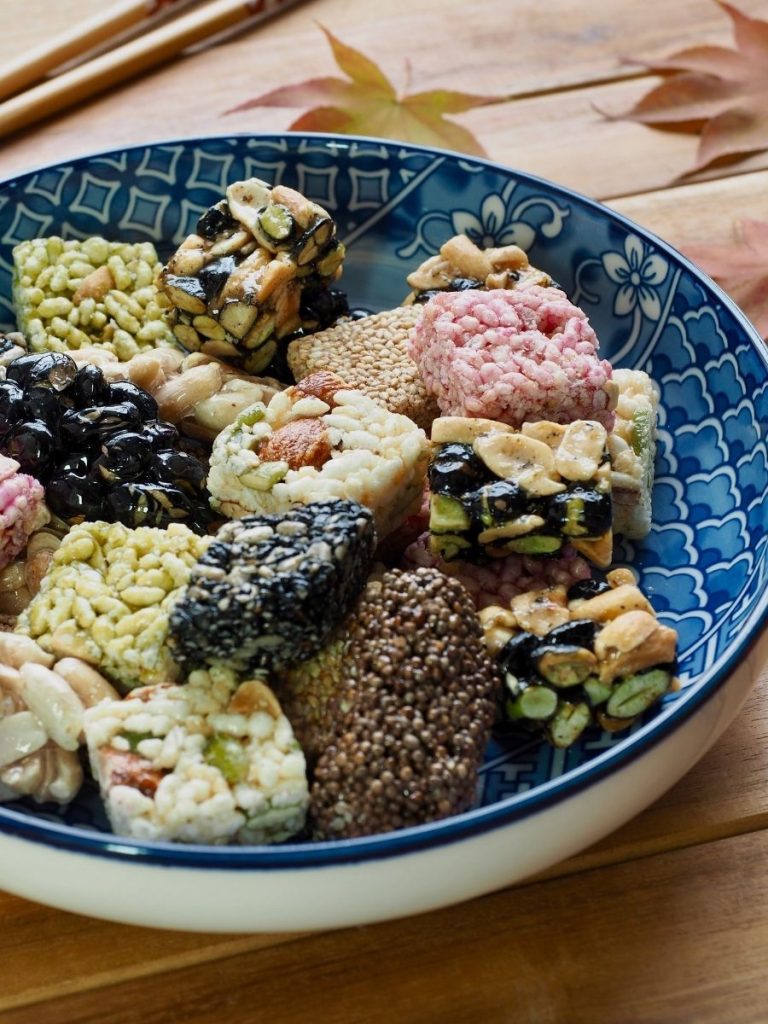
8. Gangjeong (강정)
Could you ever imagine trying a snack that is both sticky AND chewy? Me neither. Imagine my surprise when I tried gangjeong, because of how similar it is to a nutty nougat and the Chinese snack called sachima.
Gangjeong is basically a traditional Korean confection that is made by combining a mixture of puffed rice, honey or syrup, with an assortment of nuts, seeds, or beans. The mixture is then set aside for it to set into a thick, crunchy, yet sticky slab that is then sliced into bars or squares.
One would automatically think that gangjeong is heavy and rich because it is cooked in honey or syrup, but it is surprisingly crunchy and airy because of its ingredients of puffed rice, nuts, and seeds.
Gangjeong is often served during festivals and celebrations because it symbolises prosperity, celebration, and generosity, making it a lovely souvenir. You can find gangjeong at hangwa specialty shops (Korean confectionery shops), traditional markets, and food halls.
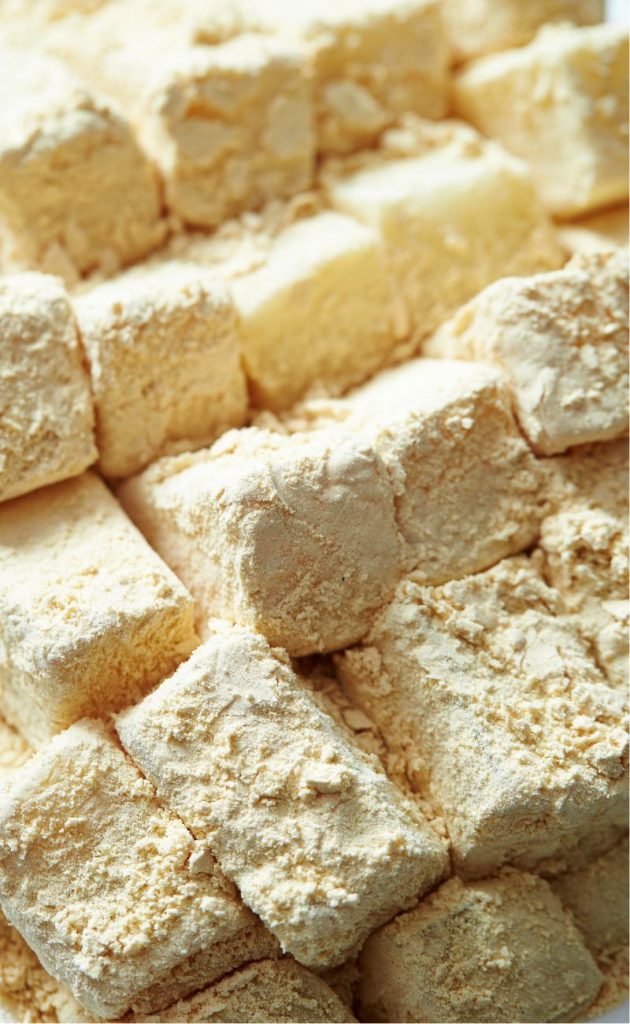
9. Injeolmi (인절미)
I highly recommend starting your traditional Korean snack adventure with the classic injeolmi if this is your first foray into South Korea’s snacking realm. This classic Korean rice cake looks like semi-transparent rice cake bars that are coated in roasted soybean powder, giving it its classic beige appearance.
It is soft, chewy, and mildly stretchy, while being slightly powdery on the outside thanks to the roasted soybean powder. But it being powdery is a good thing because injeolmi can get very sticky without it. This gives injeolmi its slightly sweet yet savoury and earthy taste instead of being totally sugary.
Injeolmi is one of the easiest traditional Korean snacks to find in both its freshly made rugged form and beautifully wrapped in bojagi (traditional Korean textiles) for gifting because of how it is commonly gifted during family gatherings, special occasions, and served during banquets.
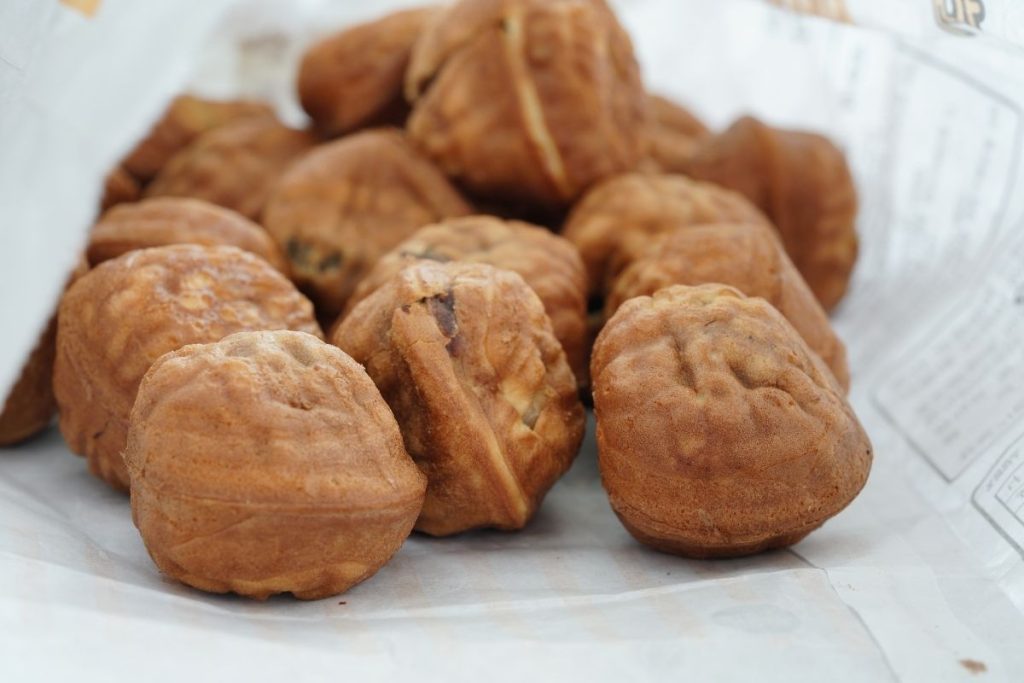
10. Hodu-gwaja (호두과자)
Hodu-gwaja was one of my favourite winter snacks when the temperatures in Seoul were -3°C on average during early noon. I’d always get mine from a sole vendor selling this in Mangwon Market who made them fresh on order, which is why they were one of the most comforting hot traditional Korean snacks.
Hodu-gwaja is a bite-sized, walnut-shaped wheat cake filled with sweet red bean paste or custard paste, and sometimes chocolate depending on availability. Some vendors even fill their hodu-gwaja with chopped walnuts, but I’m not too fond of those. Hodu-gwaja are typically baked in cast iron moulds that resemble walnuts, which gives hodu-gwaja its classic appearance.
Each bite is a real treat thanks to its soft, cakey exterior and its hot, smooth filling that is mildly sweet yet comforting. It’s so light that I would easily devour 5 of these at a go while strolling through Mangwon Market to get myself some banchan for the week.
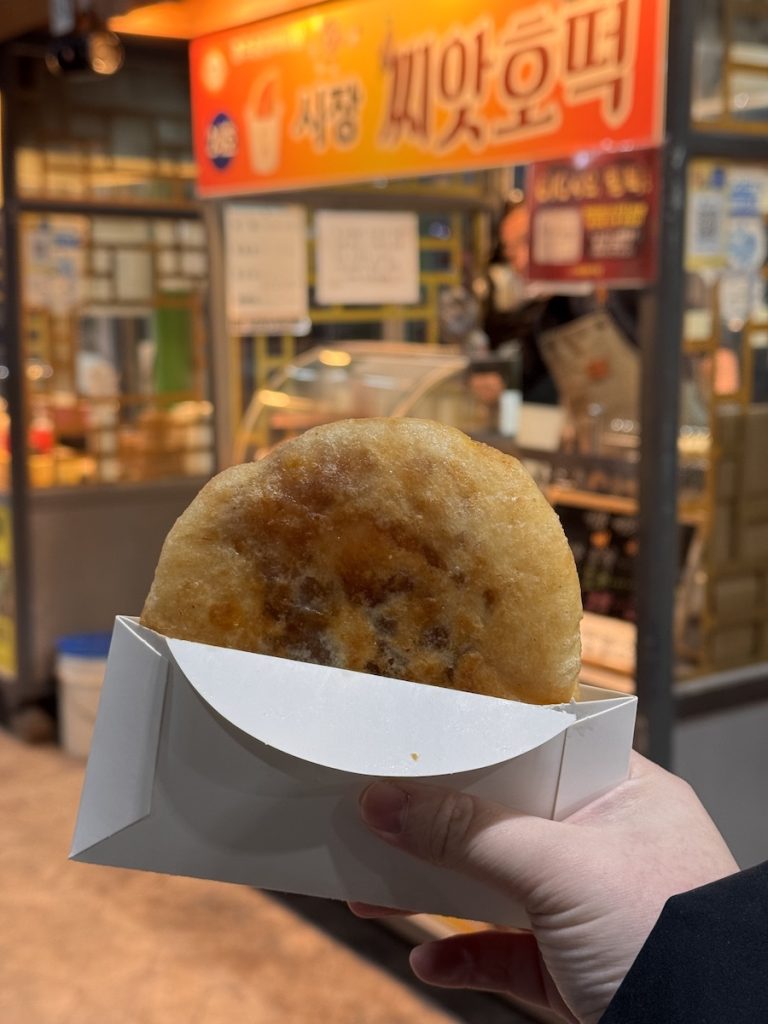
11. Hotteok (호떡)
You absolutely cannot go through South Korea without having at least one hotteok! These Korean-style sweet pancakes are one of the best traditional Korean street snacks that are found all over the city, be it through a cart by the streets of residential districts, the local traditional markets, and even at random tuck shops.
Hotteok is often made fresh on order because the (only) way to eat it is to have it hot off the grill pan. These pancakes are made from yeast-leavened dough and filled with a mixture of brown sugar, cinnamon, and sometimes chopped nuts. More modern iterations of hotteok sometimes include japchae (Korean glass noodles with vegetables), red bean, mozzarella cheese, and even assorted seeds just like the highly popular ones found in Namdaemun Market.
Pro Tip: I highly recommend trying out the vegetable hotteok at Namdaemun Market after you’ve tried the brown sugar hotteok. It’s absolutely delicious when enjoyed hot on the spot!
The best hotteoks are lightly crisp and golden on the outside, but soft and chewy on the inside with a gooey, melted cinnamon brown sugar centre. Just be careful when you bite into your hotteok – not only is the centre hot, but when you enjoy it during winter it can even drip into your jacket’s long sleeve (this happened to me once too often).
12. Bungeo-ppang (붕어빵)
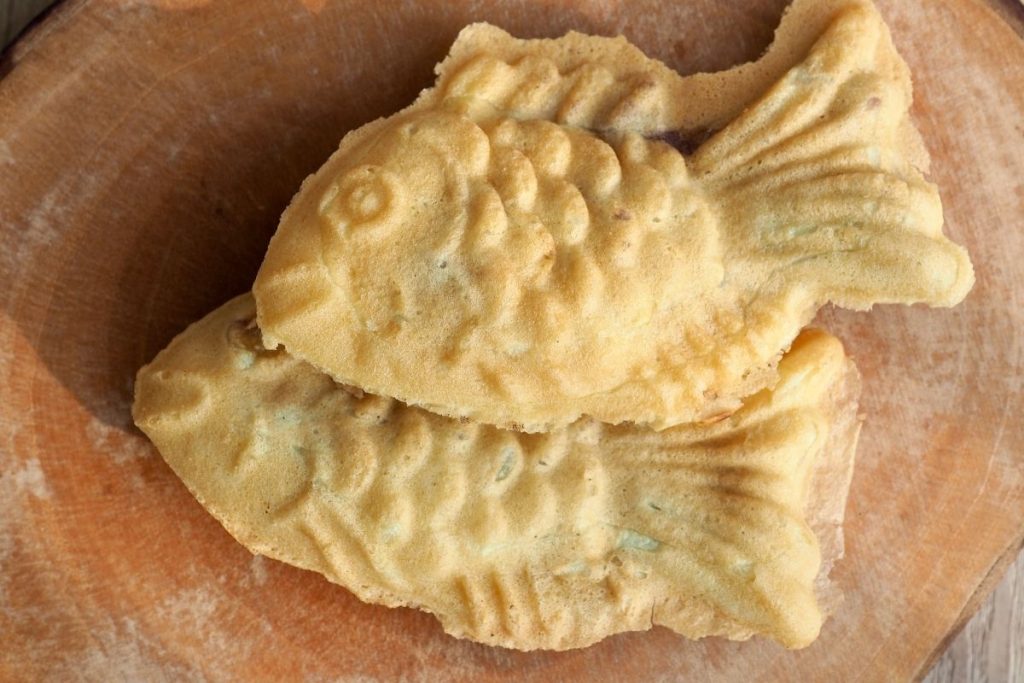
Those of you who love the Japanese snack called taiyaki would definitely enjoy bungeo-ppang. My mom couldn’t get enough of bungeo-ppang and would often buy a set of it whenever we came across a stall selling it on our walks through the city. And trust me when I say that they are almost everywhere, especially during colder months.
Bungeo-ppang is a fish-shaped traditional Korean pastry that is commonly filled with sweet red bean paste. But these days you’ll also often find vendors offering them with custard, chocolate, or even ice cream fillings. Bungeo-ppang has a crisp and lightly browned exterior and it is soft and fluffy inside with a taste that is like a slightly eggy pastry. Couple that with the warm and smooth filling? Absolute bliss during winter.
13. Ppopgi (뽑기) / Dalgona (달고나)
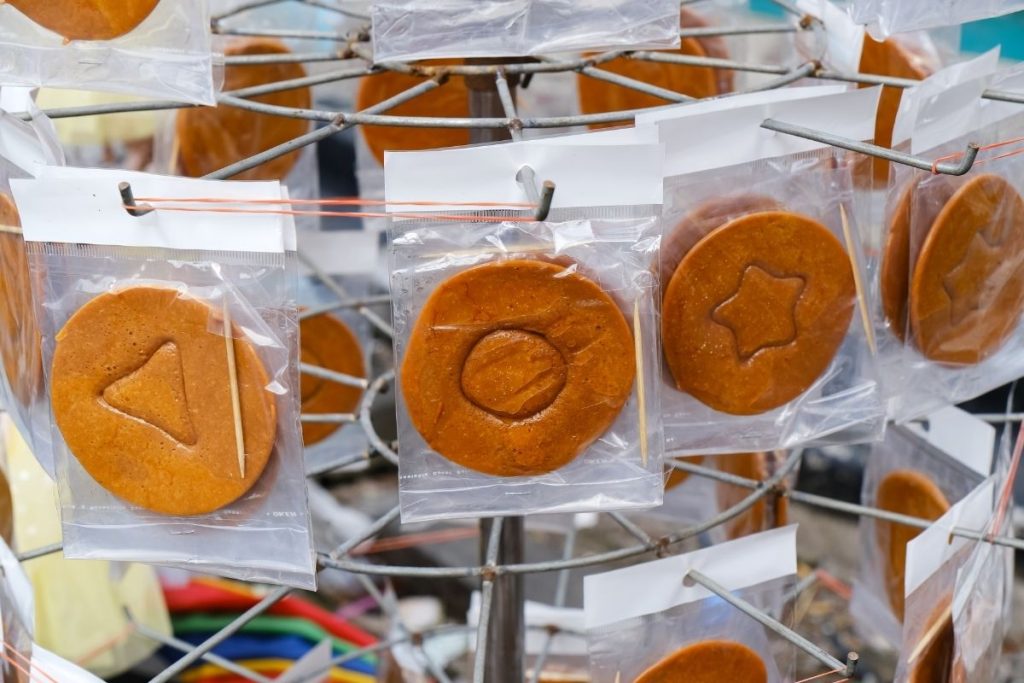
Ppopgi found itself in the limelight when it was featured in one of the deadly Squid Game challenges, but non-native Koreans would be more familiar with its other name; dalgona. Ppopgi or dalgona is typically sold in traditional markets alongside tteok or gangjeong, street stalls, and during cultural festivals.
This traditional Korean candy is made by melting sugar together with a small amount of baking soda to give it its airy, honeycomb-like texture. The candy mixture is then poured onto a hot griddle, flattened, and stamped with a shape, resulting in its highly distinctive appearance. It has a toasty, caramel-like sweetness with a very slight hint of bitterness from the caramelisation. While I’m personally not a huge fan because I’m not one for candies, I’d still recommend trying it at least once during your trip in Korea.
Fun Fact: Did you know that dalgona was actually popularised during the 1950s to 1970s as a low-cost, post-war treat in Korea? Children would use it as a form of play by trying to cut out the shape in the middle of the candy without breaking it.
14. Mosi Tteok (모시떡)
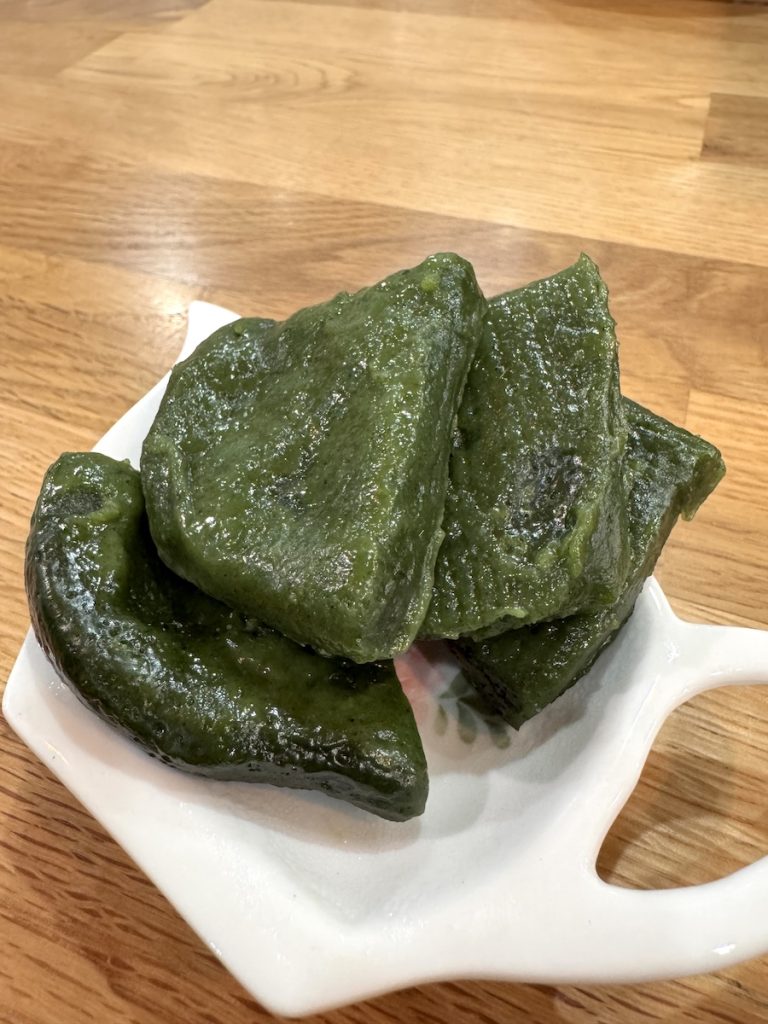
I dare say that mosi tteok (mosi tteok) is one of the rarest ones out of all the traditional Korean snacks on this list. This particular rice cake can sometimes be confused with ssuk-tteok because of its similar green hue and earthy taste, but here’s where they differ…
Mosi tteok is made by incorporating mosi leaf extract (leaves of the rami plant) into glutinous rice dough. The mosi rice cake dough is then shaped into small rounds, discs, or bars and filled with sweet red bean paste or left plain.
What you can expect texture-wise is a soft, yet pleasantly chewy bite that is slightly firmer than most rice cakes. And thanks to the mosi leaves’ naturally herbal flavour, the mosi tteok also releases a mildly herbal-like taste and gentle bittersweet flavour, which makes them the ideal companion to a cup of Korean green tea or yuja-cha (yuzu drink) and perhaps a side of jwipo (a dried seafood snack native to South Korea).
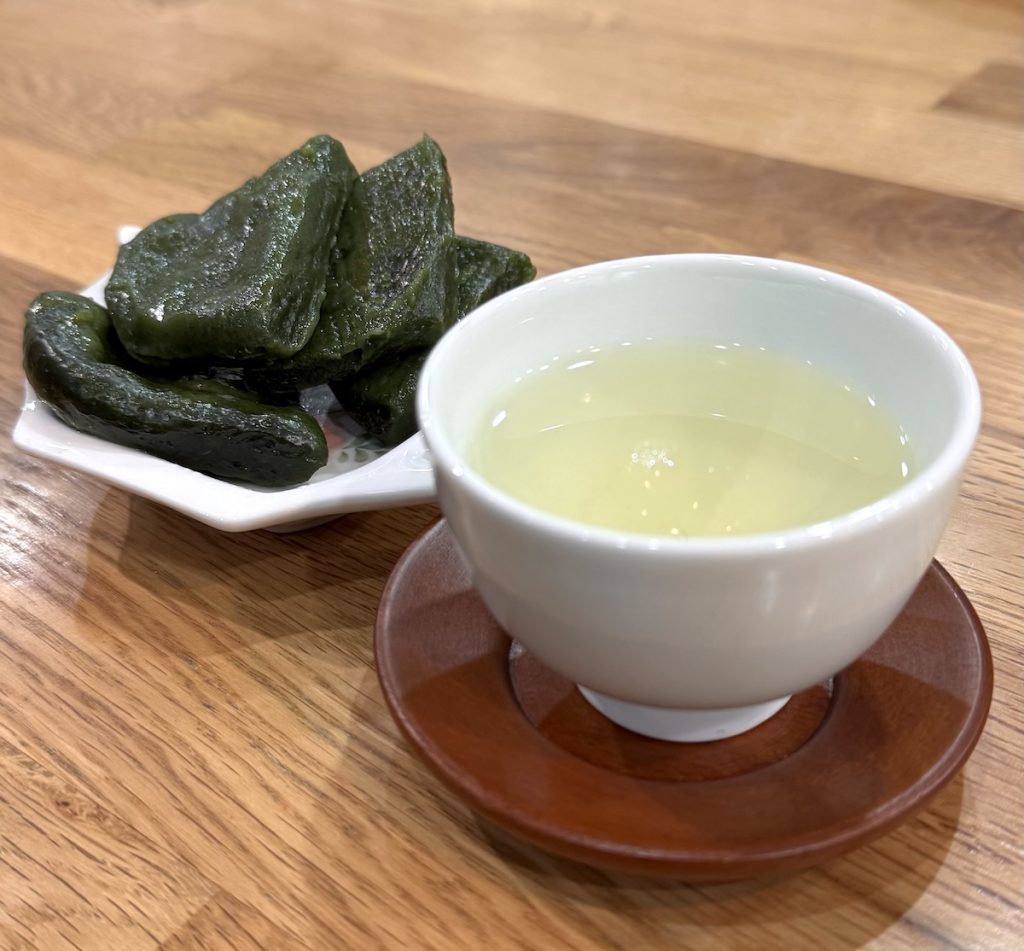
This regional rice cake is not often found in popular traditional markets like Mangwon Market and Namdaemun Market, but you will find it in specialty rice cake shops during local culturally festive periods. Alternatively you can order them via Coupang (essentially South Korea’s version of Amazon) where they’ll arrive individually packed.
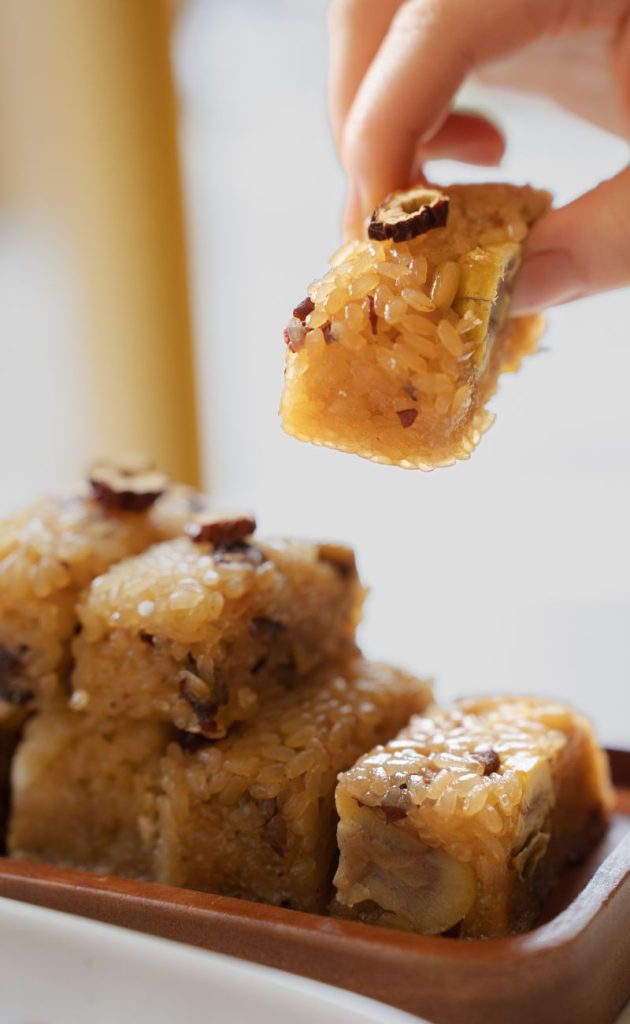
15. Yaksik (약식)
If you took a quick glance at yaksik, you may wonder if it is similar to gangjeong because of its typical squarish, nutty appearance. But nope, yaksik’s texture, flavour, and method of making are totally different.
Yaksik is a traditional sweet glutinous rice dish that is made by steaming glutinous rice with a mixture of soy sauce, honey, sesame oil, pine nuts, jujubes, and chestnuts. It has a soft, chewy, dense, and sticky texture thanks to the natural stickiness of glutinous rice, but the nuts in its mix gives it a layer of crunch to balance it out from being too heavy.
Fun fact: Did you know that yaksik literally means “medicinal food”? It was historically created as a medicinal dish because it contained honey, which was treated as a medicinal ingredient from ancient times.
While yaksik is one of the heavier traditional Korean snacks on this list in terms of satiety, it is still a pretty fantastic snack that is designed to be filling and nourishing. You can easily find it in traditional markets and standalone rice cake shops so do give it a try!